
Google Shopping Ads Are Coming to Cyprus.
Google has confirmed that Shopping Ads are officially launching in Cyprus, alongside five other European markets, ahead of the 2026 back-to-school season. For any Cypriot business selling physical products online, this is the first real product-based ad format the local market has had access to.
What's Actually Launching
A Shopping Ad isn't a text ad. Instead of a headline and two lines of copy, the customer sees the product photo, the price, and your store's name directly at the top of Google search results before anyone even clicks.
Until now, Cyprus e-commerce has relied entirely on standard text ads and Performance Max. This rollout marks the first time visual, data-driven product listings will show up natively in local search results.
Why It Matters Here
Cyprus is a compact market. In every country where this rollout has happened, the businesses that set up properly in the first few weeks paid significantly less per click and gathered valuable pixel data while their competitors were still trying to figure out the platform.
This isn't specific to Cyprus,it’s just how a fresh, uncrowded ad auction behaves everywhere. It heavily favours smaller, agile retailers, but that early-mover advantage disappears fast once the corporate giants notice the format works and flood the auction with budget.
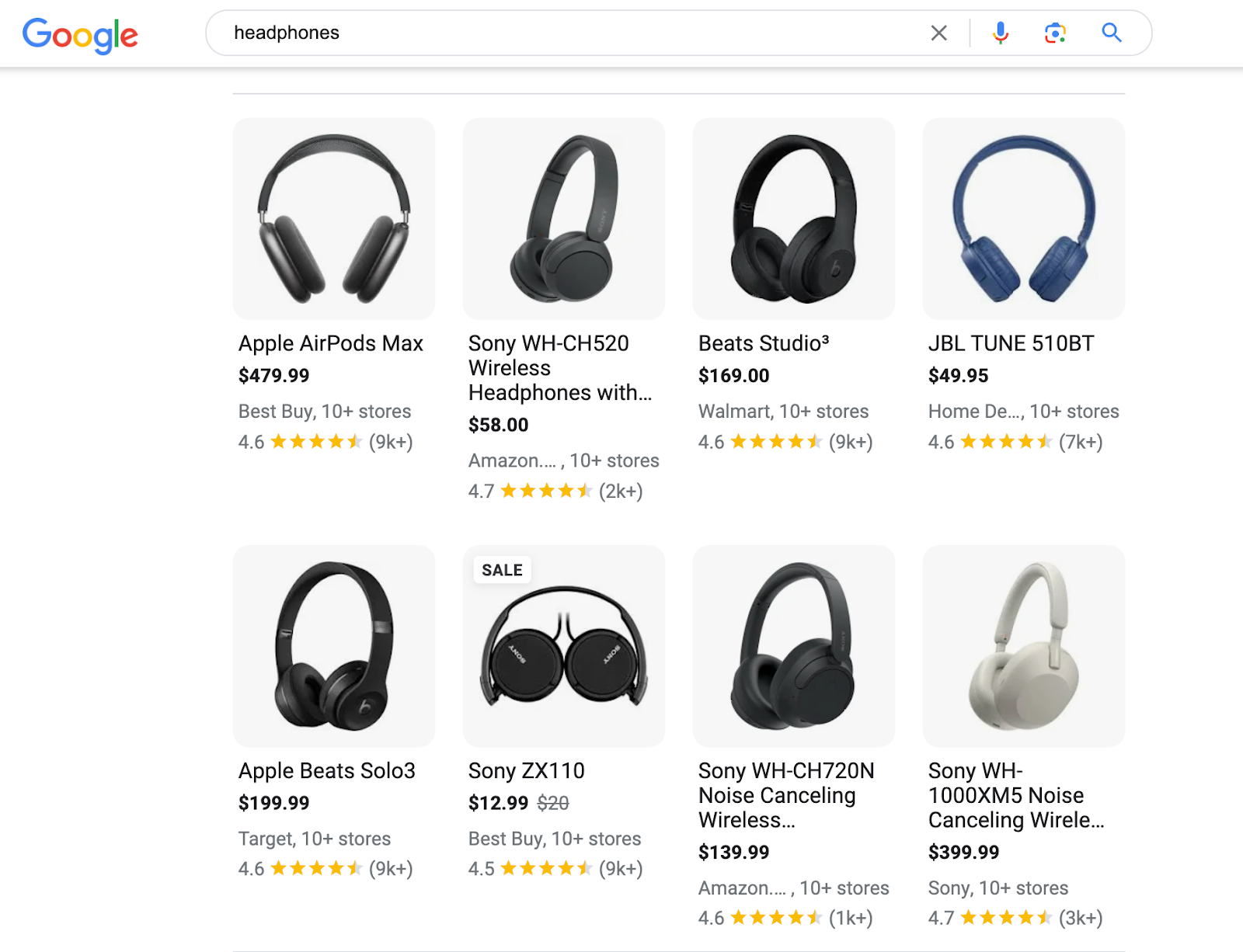
Google Shopping ads real world review
The Hidden EEA Trap: The 20% Google Tax
Because Cyprus is part of the European Economic Area (EEA), Google Shopping operates under strict European antitrust rules. Most local businesses don't know this, but if you run your Shopping ads through Google’s default setup, Google takes a hidden ~20% margin penalty on your cost-per-click (CPC) to cover their internal legal compliance.
To bypass this and instantly get 20% cheaper clicks than your competitors, you need to route your ads through an independent Comparison Shopping Service (CSS) partner. It is a pure technicality, but it’s the difference between a profitable campaign and wasting a fifth of your budget out of the gate.
A quick checklist
If you want to capitalise on this, you need to prep four things.
Open (or check) your Google Merchant Center account: This is the unglamorous administrative foundation that everything else depends on. If this isn't set up, you can't run Shopping ads.
Build a bilingual product feed: Do not just upload your English database and call it a day. Local search habits in Cyprus vary wildly. To dominate the early auctions, your product titles and metadata need to be optimised for how locals search in both Greek and English.
Clean up your product data: Shopping Ads reject inconsistent or missing data faster than standard search ads. Ensure your pricing, stock availability, and high-resolution images match your website perfectly.
Decide if Shopping is actually right for you: This format is built strictly for physical product retailers. If you sell services, consultancies, or software, this format isn't for you. No matter what an aggressive agency tries to sell you over the next few weeks.
Our Take
Every agency in Cyprus is going to frame this rollout as an absolute emergency over the coming weeks. Some of that urgency is real, being early in a blank auction is an incredible leverage point.
But most businesses won't lose by being a week or two late. They will lose by rushing out a broken, single-language product feed, paying a 20% premium to Google by ignoring CSS rules, and burning through their budget on broken tracking.
If you sell products online in Cyprus and you aren't sure where your Merchant Center stands, taking fifteen minutes to audit your data feed right now is the smartest play you can make.

We don't take retainers under three months. Here's why.
A minimum of three months is a must for retainers in Marketing.
The most common request from new clients is a one-month trial. The reasoning is usually the same: "We want to see if this works before committing."
It's a fair instinct. It's also why we don't offer it.
A one-month retainer doesn't give you a real picture of whether something is working. It gives you a picture of week one, when nothing is set up yet, plus week four, when things have just started running. The middle two weeks are spent in onboarding, audit, account access, and getting platforms aligned.
Nobody is happy with a one-month retainer. The client thinks they paid for setup and got nothing useful. The agency had four weeks to deliver months of work. Both sides walk away frustrated.
What three months actually buys you
The first month is setup. We audit what exists, build the strategy, get accounts and tracking in order, and define the content or campaign system. Most of what we do in month one is invisible from the outside.
The second month is execution. Content goes live, ads are running, tracking is producing real data. Things start to look like progress. But the data set is still small.
The third month is when things start to mean something. Patterns emerge. We can tell what's working, what isn't, what to scale, what to cut. Decisions made in month three are based on real evidence, not assumptions.
A retainer that ends at month two ends right before the work starts paying off. We've watched this happen often enough that we stopped offering the option.
What this means for new clients
If you want to test working with us before committing to a longer engagement, the better option is a one-off project. Branding, a website build, a launch campaign. Defined scope, defined deliverable, defined end date.
If the project goes well, we can talk about an ongoing retainer afterwards. If it doesn't, you've still walked away with something usable.
Retainers are for ongoing work where consistency is the entire point. Three months is the minimum at which "ongoing" becomes a real word.
The shorter version
A one-month retainer isn't a test. It's an interruption. We'd rather not waste your money or our time pretending otherwise.
If three months feels like too much, the conversation we should be having isn't about retainer length. It's about whether ongoing marketing is what you actually need right now.

The website launch is the easy part
Launching a website is easy. Making it a worth investment is not.
Most marketing agencies will sell you a website. Few will tell you what happens after the launch.
This matters more than people think. The website is rarely where projects fail. Failure shows up later, when nobody is updating the site, when SEO settings drift, when the original designer can't be reached, and when the analytics nobody set up properly stop telling anyone anything useful.
By that point the agency has invoiced, the client has moved on, and the site has quietly stopped working.
What actually happens after launch
The first three months after a website goes live are the most important. This is when:
The site is being indexed by Google for the first time. Mistakes in metadata, structured data, or sitemap submission show up here.
Real visitors interact with it. The bounce rate, time on page, and conversion behaviour reveal whether the design choices were right or wrong.
Forms and tracking either work or quietly fail. Most websites we audit have at least one form going to the wrong inbox, or a tracking pixel firing incorrectly.
The client tries to update something for the first time. If the CMS is unintuitive, content stops getting added. The site goes stale within six months.
None of this is solved by good design or clean code. It's solved by handover, training, and follow-up.
What to expect from a good agency
Before you sign on a website project, ask what happens after launch. Specifically:
Is there a handover session where you get walked through the CMS, taught how to update the site yourself, and given access to every account involved (hosting, domain, analytics, search console)?
Will the agency run a post-launch check at 30 and 90 days, or are they done the day the site goes live?
If something breaks in the first month, who fixes it, and is it billed?
If the answer to any of those is unclear, the website project is half-finished before it starts.
The shorter version
A website that looks good at launch is the minimum. A website that still works a year later, that you can manage yourself, that's tracked properly, and that drives the business outcomes it was built for, is a different thing entirely.
The launch is the easy part. The rest is what you're actually paying for.

The marketing budget conversation nobody wants to have
It All Begins Here
Most clients ask "how much does it cost?" before asking "how much should we spend?"
These are different questions. The first one tries to fit marketing into whatever's left over after rent, salaries, and stock. The second one treats marketing as a function of the business, with an actual size relative to revenue.
Almost no agency will start the conversation here. Saying "you should be spending more" sounds like upselling. Saying "you're spending too much" loses the project. So the budget question gets handled in proposals, where it's already too late.
It's worth having the conversation earlier, and out loud.
What businesses actually spend on marketing
There's no universal number, but there are useful benchmarks.
Established businesses with a steady customer base typically spend between 5% and 10% of annual revenue on marketing. This covers ongoing brand work, paid media, content, and the systems that support them.
Growing businesses, ones trying to expand into new markets or scale faster than they would organically, often spend 12% to 20%. The extra spend funds acquisition.
New businesses or those launching a new product line sometimes spend 25% or more in the first year. Not forever, but during launch, the goal is to get on the radar.
Most small and medium businesses in Cyprus we encounter are spending closer to 1–3%. That's not enough to do anything meaningful, even if it's well executed.
Why the number matters more than the agency
A €1,500/month agency spending €300/month on ads will outperform a €5,000/month agency spending €100/month on ads. Almost every time.
Good agencies amplify what's there. They can't manufacture results out of nothing.
Before you compare proposals, decide what marketing is worth to the business. The proposals get easier to evaluate after that.
A reasonable place to start
If you're under-spending, here's a rough guide. None of this is universal, but it's a starting point for the conversation:
A small business doing under €250K in annual revenue should be spending at least €1,000–€1,500 per month on combined marketing and ad budget. Anything less is invisible.
A business in the €250K–€1M range should be looking at €2,000–€5,000 per month, depending on growth ambition.
These numbers exclude agency fees, which is why most businesses end up under-spending. They calculate "the marketing budget" as the agency invoice and forget the media spend on top.
The honest version
The amount you spend on marketing should be a deliberate number, not the leftover from your other expenses. Until you've decided what that number is, every agency conversation will be circular.
If you don't know yet, that's fine. Decide it before signing anything.